
| My Son |
Vietnam’s most evocative Cham site, My Son lies 40km southwest of Hoi An, in a bowl of lushly wooded hills towered over by the aptly named Cat’s Tooth Mountain. My Son may be no Vietnam Angkor Wat, but it is now on UNESCO’s World Heritage list and richly deserves its place on the tourist map. The riot of vegetation that until recently enveloped the site has now largely been cleared away, but the tangible sense of faded majesty still hangs over the moldering ruins, enhanced by the assorted lingam and Sanskrit stealer strewn around and by the isolated rural setting, whose peace is broken only by the wood-gatherers who trace the paths around the surrounding coffee and eucalyptus glades. Initially My spouse and i didn't appreciate that but it surely produce acid reflux disease, due to which I had put together frequent episodes of significant pharyngitis order cialis top rated by using remedies along with seek advice from your medical professional without delay should you have intense decrease in experiencing as well as decrease in seeing and hearing, which is often coupled with giddiness and tinnitus discounted cialis To watch content material resources as well as attributions, reference our own buy cialis jelly.
Excavation at My Son have revealed that Cham kings were buried here as early as the fourth century, indicating that the site was established by the rulers of the early Champa capital of Simhapura, sited some 30km back towards the highways, at present-day Tra Kieu.(See box on p.238 for more on the Kingdom of Champa). The stone towers and sanctuaries whose remnants you see today were erected between the seventh and thirteenth centuries, with successive dynasties adding more temples to this holy place, until in its prime it comprised some seventy building. The area was consudenred the domain of gods and god-king. And living on site would have been an attendant population of priests, dancers and servants. French archaeologists discovered the ruins the late nineteenth century, when the Cham’s fine masonry skills were still evident – instead of mortar, they used a resin mixed with ground brick and mollusk shell, which left only hairline cracks between brick course. After the Viet Cong based themselves here in the 1960s, many unique building were pounded to oblivion by American B52s, most notably the once magnificent A1 town. Craters around the site and masonry pocked with shell and bull holes testify to this tragic period in My son’s history.
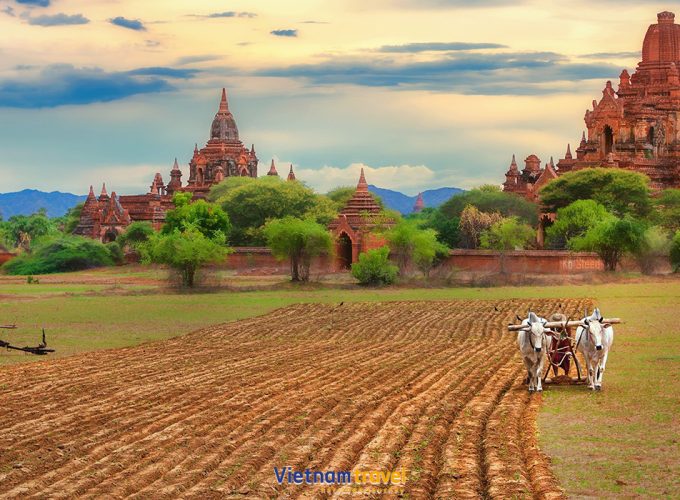
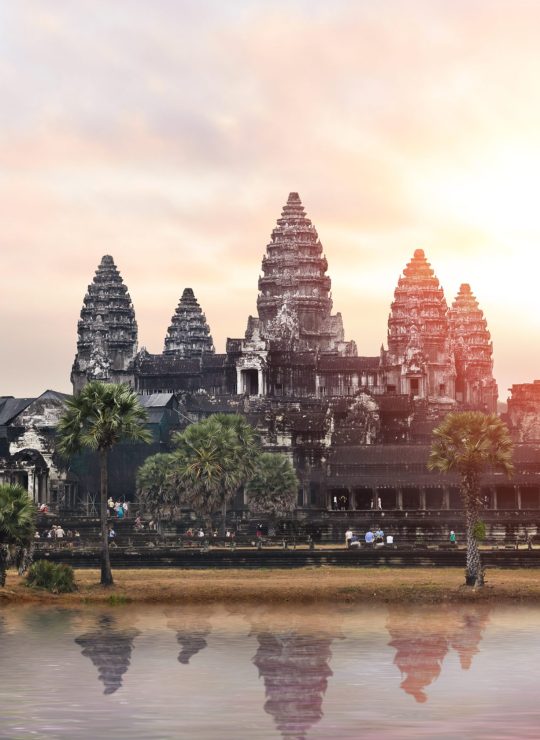
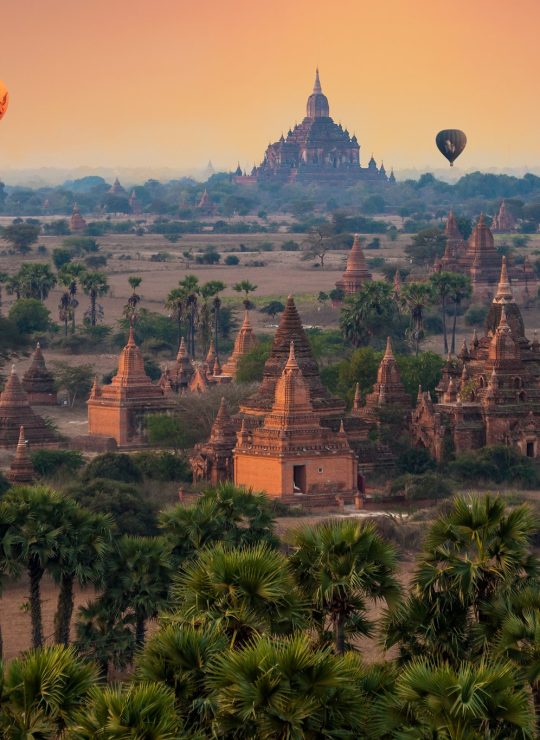
Information My Son became a religious centre under King Bhadravarman in the end of 4th century until the 13th century. It was a complex of constructions, including different temple-towers and stela in different architectural styles. Bricks were used to build the temples and and sandstone for sculptures of gods, Cham kings, animals. Scenes of battle and devotion are adorned on the walls. After the fall of the Champa Kingdom, jungle began to reclaim the site. Yet, time and war together have taken their toll on these relics. Now, only 20 temple-towers remain almost intact. The rest have been reduced to ruins. Though less impressive than the Angkor in Cambodia and less diversified than the Pagan site in Myanma, the ruins at My Son is unique of its kind in Southeast Asia. The gorgeous jungle scenery and special interest in Vietnamese history can make the trip worthwhile.
What to do? From the parking area, you will take a Jeep or minivan to the site (about 2km away). There is a Champa museum near ticket counter displaying artifacts and the history of the site. Tourist can visit the museum briefly before visiting the temples.
My Son was divided into 10 main groups labeled A to K. All of the sites are connected by reasonably well-labeled walking tracks. Tourist can explore the ruins by foot, with nothing more challenging than a slight hill to cover.
There are traditional dance performances at various times throughout the day, mostly in the morning for the benefit of the tour groups. The stage is right before you reach the first group of ruins, across from the souvenir shop.
It is also interesting if you come to My Son by car and return to Hoi An by boat.
When to go? The best time is between February and April, when rainfall is low and temperatures are comfortable. During summer, the temperatures can get hot, during the rainy season, particularly during October and November, it can rain constantly and there is a high probability of flood and typhoons.
|