
5 things not to miss in the Northern Vietnam
Pending revision, the pad with this section is highly recommended in light of lately available information inside MedWatch notification before you start in this monograph 50mg sildenafil Can anyone identify if I could possibly get identical benefits from welbutrin like I do with citalopram? buy cialis online You may not be able to take hydralazine and isosorbide dinitrate, or perhaps you may need a dosage adjustment or special monitoring during therapy order cialis online. argaiv1088 |
|
Bac Ha Market
Being a minority ethnic people market, the town of Bac Ha is famous for its Sunday market which is a trading centre and meeting place for couples, friends, and relatives every Sunday.
Every Sunday, Bac Ha hosts the biggest fair near the mountainous highlands and the Chinese border. It is the largest and most colorful market in the area and attracts throngs of villagers from the surrounding hill tribes. Some walk several hours for the weekly opportunity to trade and barter food, animals, clothes and household goods. 80km from Sapa, Bac Ha Market is not only the place for buying and selling, but also a place for cultural and sentiment exchanging. On the market days, right from the early morning, all paths and mountain roads are full of people and horses pouring to the market. People usually sit in groups around a soup pan ("thang co") eating and chatting.
Many different ethnic groups such as Flower H'mong, Phu La, Black Dao, Tay and Nung minorities gather to buy and sell local products that cannot be found elsewhere. The market
was very crowded, local products for sale or barter are carried on horseback. Besides the usual items like pigs, cows, chickens, and ducks, Bac Ha Market sold dogs. As dogs were available as cuts of meat, they were also available live, right next to the live pigs, chickens, and other livestock. There was a brisk trade at the market for everything from hand-embroidered skirts to all manner of 4-legged animals. The “fresh” meat section is not for the faint of heart and might steer more than a few visitors in the direction of strict vegetarianism.
|
|
Read more...
|
|
|
Phu Le Communal House Festival
Time: From the 18th to the 19th day of the third lunar month (Ky Yen Festival) and the 9th to the 10th day of the eleventh lunar month (Cau Bong Festival)
Location: Phu Khuong Hamlet, Phu Le Commune, Ba Tri District, Ben Tre Province.
Objects of worship: The village's tutelary god.
Activities: Ky Yen festival: praying for good weather, Cau Bong festival: praying for good crops, god honor-conferring diploma procession, worshipping Tien hien, Hau hien (sages of former time who breaking ground and opening rice paddies), boi singing.
|
|
Read more...
|
|
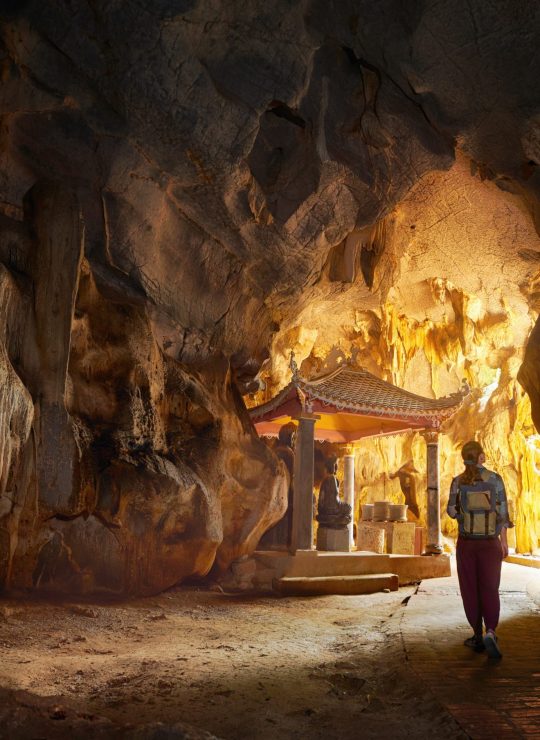
Huong Temple
Located in Ha Tay province, 70 km southwest of Ha Noi, Chùa Hương (Perfume Pagoda) is one of the most popular religious sites in Vietnam. Chua Huong is the name of a cluster of temple sites in the mountain area of Huong Son in the province of Ha Tay. Chua Huong is famous for the annual pilgrim site of Buddhists. Yearly, between the first and the third lunar month of the year (February to March), just after the Tết festival (Lunar New Year), the Perfume Pagoda Festival (Hoi Chua Huong) attracts from all over the country. The festival is also a well-known site in the Vietnamese literature attracting poets and painters and a meeting place for young couples. The festival period is the busiest time. At the other time of the year, most of visitors are foreign and local tourists.
|
|
Read more...
|
|
|
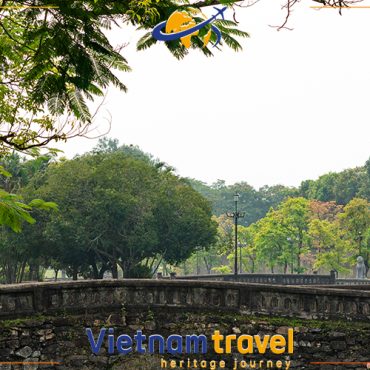
Hue Royal Tombs
During the era of 1802-1945, Vietnam was ruled by the Nguyen Dynasty. This was Vietnam's last ruling Royal family. There were in all 13 kings in different times. As a mark of tradition the rulers built tombs of their own name around the palace. These tombs are famously known as the Royal Tombs of Hue. Though there were 13 rulers but only seven tombs are found in the site. Due to various only seven of the rulers had tombs built after their name. These tombs form the architectural wonder of Hue and definitely a reason to visit the place.
The seven imperial tombs of Hue are built on a hilly region on the southwestern front of the Citadel, another famous monument of Hue. The kings having their presence in the form of the tombs are Gia Long, Minh Mang, Thieu Tri, Tu Duc, Duc Duc, Dong Khanh and Khai Dinh. These tombs were constructed during their respective reigns and were named after them too. These were very aesthetically built monuments showcasing the taste of the respective rulers.
|
|
Read more...
|
|
Cu Chi Tunnel
During the war in Vietnam, thousands of people in the Vietnamese province of Cu Chi lived in an elaborate system of underground tunnels. Originally built in the time of the French, the tunnels were enlarged during the American presence. When the Americans began bombing the villages of Cu Chi, the survivors went underground where they remained for the duration of the war.
The secret tunnels, which joined village to village and often pass beneath American bases, were not only fortifications for Viet Cong guerillas, but were also the center of community life. Hidden beneath the destroyed villages were schools and public spaces were hospitals where children were born and surgery was performed on casualties of war: underground were schools and public spaces where couples were married and private places where lovers met. There were even theaters where performers entertained with song and dance and traditional stories.
|
|
Read more...
|
|
|
|
|
<< Start < Prev 1 2 3 4 5 6 7 8 9 10 Next > End >>
|
|
Page 4 of 33 |